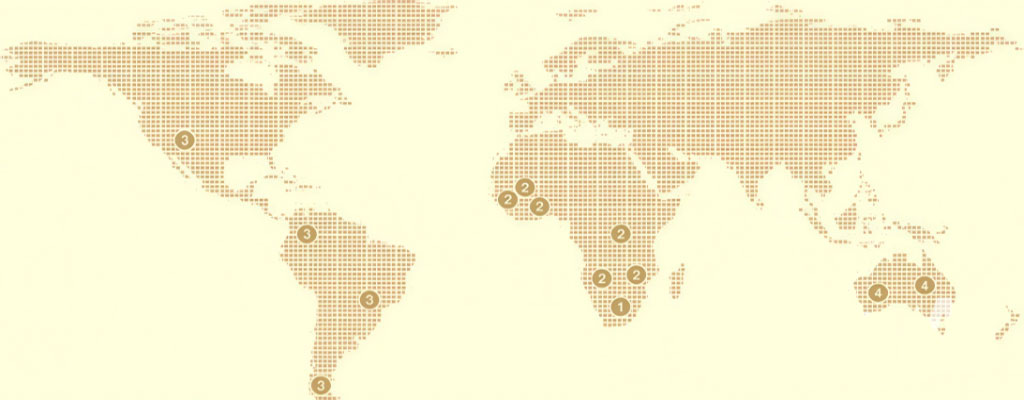
Our stakeholders are highly diverse, reflecting the diversity of the geographical regions in which we will operate, the wide range of groups with whom we will interact and the diversity of issues with which we will with deal.
We will engage with stakeholders in a range of different ways, guided by the needs of the business, our values, and the standards and processes on stakeholder engagement that we could adopted. The nature and frequency of engagement depends on the type of stakeholder, the nature of the relationship and the issues under discussion.
Stakeholder identification and engagement should undertake in all areas of operation, defined and undertaken at different levels in the organization. Broad guidelines on shareholder identification will be set out in the group-level management standard on engagement, which will approved by the executive committee in our company. This standard document of Cazimir Mining is to engage in all operations in building successful and mutually-beneficial relationships with stakeholders throughout the mine life cycle (including exploration projects, new operation. The standard recognizes that if we should fail to engage effectively could result in potential disruptions at our operations and could exacerbate challenges to our reputation. Our drive is a tool for building social partnerships to secure our social license to operate and positions Cazimir Mining as the preferred operator wherever the company has a presence.
Stakeholder groups with whom we will interact should include communities, investors, labor, media, employees, governments, politicians, vendors, non-governmental organizations (NGOs) and joint venture partners.
We view our key stakeholders as partners, and engage with governments and communities to seek mutually-beneficial outcomes. Developing long-term partnerships with host communities and governments compels us to first understand the risks and drivers that will allow an operation to be successful, and then to invest in areas that address these risks and opportunities in a way that is relevant to the communities affected by that operation.
Cazimir Mining is a unique investor in communities in which we intended to operate and will developed a sustainable development framework that will aims to introduce a step change in the way in which community relationships are managed. This will enable a consistent approach to building partnerships for development across the group. Implementation of this strategy will position the business to demonstrate tangible benefits to communities while building operations that consistently meet performance targets, yield value for communities, customers and shareholders and balance the priorities of each group.
In the process of mining all by-products will be recovered as a result of the processing of the gold Ore Reserve. The reserved Ore will be kept and process into pure Gold Bars for the country Gold reserve. Such reserve will be under heavy security at all time. A country with a strong Gold reserve is considering as a wealthy country.
The information in this report relating to exploration results, Mineral Resource and Ore Reserve is based on information compiled by the Competent Persons. The Competent Persons consent to the inclusion of exploration results, Mineral Resource and Ore Reserve information in this report, in the form and context in which it appears.
During the past decade, company has developed and implemented a rigorous system of internal and external reviews of exploration results, Mineral Resource and Ore Reserve. A documented chain of responsibility will be existed from the Competent Persons at the operations to the company’s Mineral Resource and Ore Reserve Steering Committee. If there any or one will be formed
While the operational ‘engine room’ of the business has never been in better shape, prevailing trends in the gold market continue to give us cause for optimism. Demand and supply fundamentals, as well as the reigning uncertainty in global markets, all underpin a bull market now in its 10th year. Bullion touched a record closing price of $1,900/oz. in September 2011 before settling lower at $1,563/oz. at year-end. This represented an 11% gain for 2011, significantly outperforming all benchmark equity indices across the globe.
Demand for gold from central banks the world over continued to grow. After decades of selling, consumer’s adapted quickly to higher prices and gold exchange traded funds continued to grow in popularity among investors of all kinds. Still, the supply response from the industry in these times of plenty remained somewhat muted as constraints to new production, including remoteness, lack of infrastructure, permitting delays and a dearth of new discoveries, intensified. Meanwhile, the price was driven higher by a range of factors in different markets, such as It is Important to note that once the overall macroeconomic picture improves, the radically expanded balance sheets of the world’s largest economies are likely to present a serious inflationary threat, potentially limiting downside for some time to come.
Through this Annual Integrated Report, we have tried to ‘paint a picture’ for stakeholders of all aspects of our business – the risks and opportunities we face, our objectives and targets, the strategies we have developed in response and indeed the persona of the business. We recognize that ‘people are the business’ – those within the company, those who interact with the company, and those around the company – and that we have a duty and responsibility to engage and interact with them, and to understand and to meet their expectations of being a responsible citizen. A report such as this can only provide a snapshot, however, and we have made more detailed, specific and localized reporting on our website.
Although we have produced a separate Sustainability Report, it is important to understand that sustainability as we understand it is that which underlines the long-term viability of our business. An important development during the year has been the development of a sustainable development framework for the group which, like our values, will ensure a consistency of interaction and approach across the group, but that will address the needs embedded within specific operations and locations.
All mining operations eventually cease. An integral aspect of operating our mines is the on-going planning for closure planning, together with estimate of associated liability costs and the assurance of adequate financial provisions to cover these costs.
Closure planning is an activity that starts at exploration and mine design stage and continues throughout the life of mine:
A particular challenge is concurrent rehabilitation, which is carried out while a mine is still operational. This practice serves to decrease the current liability and reduces the final rehabilitation and closure work that must be undertaken, but has the potential to sterilize reserves, which the company might wish to exploit should conditions, such as the gold price, change.
Our closure standard stipulates that closure planning must be undertaken in consultation with the community. In the course of these consultations, different issues are raised which require site-specific solutions. Livelihood preservation and infrastructure are often key requirements. Local people, who were previously employed at the mine, may receive education and training so as to seek viable employment alternatives. Communities also require information on rehabilitation of the landscape and on any lasting environmental impacts.
Our long-term remediation obligations include decommissioning and restoration liabilities relating to past operations, and are based on our environmental management plans and comply with current environmental and regulatory requirements.
Provisions for remediation costs are made when there is a present obligation, it is probable that expenditure on remediation work will be required and the cost can be estimated within a reasonable range of possible outcomes.
These costs are based on facts currently available, technology expected to be available at the time of the clean-up, laws and regulations presently or virtually certain to be enacted and previous experience in the remediation of contaminated sites.
Provision for restoration and decommissioning costs are made at the present value of the expenditures expected to settle the obligation, using estimated cash flows based on current prices and discounted at a pre-tax rate that reflects current market assessments of the time value of money. An assessment of closure liabilities is undertaken annually.
.